
Lingual Orthodontics in Zaragoza
Lingual orthodontics is an alternative to traditional braces for people who need to straighten their teeth but are uncomfortable with traditional orthodontic treatments.
Lingual braces, along with Invisalign, are among the so-called invisible orthodontic treatments available on the market today.
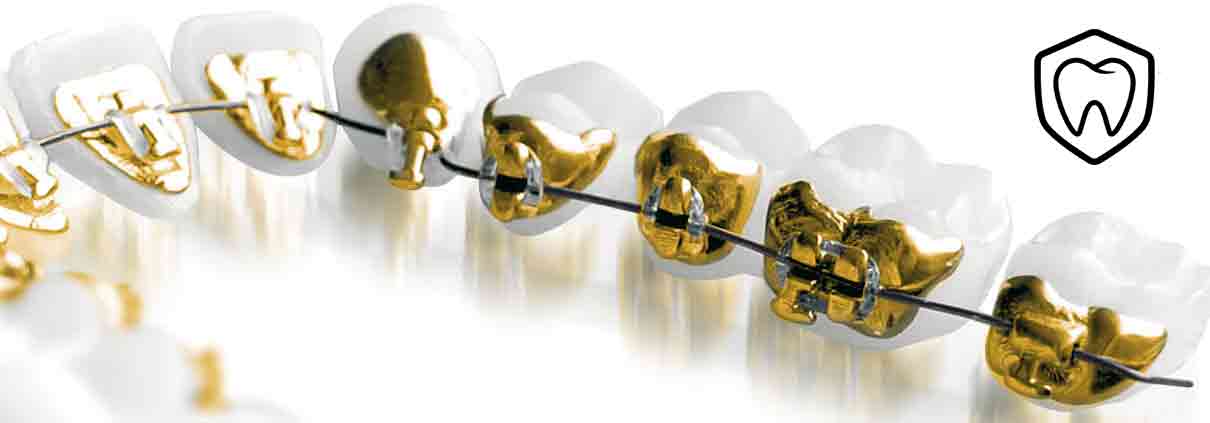
The main difference between lingual orthodontics and traditional braces is that the brackets are placed on the back of the teeth, making them invisible to others.
Some of the brands associated with this technique include Incognito® and iBraces® (by 3M), In-Ovation® L (by Dentsply), and Harmony® (by American Orthodontics).
What is lingual orthodontics?
Let’s start from the beginning. Lingual orthodontics is a method that allows you to straighten your teeth by placing all the components (brackets, wires, and elastics) on the back of your teeth.
Although the placement of the braces is different, both traditional and lingual braces have many similarities, since the type of material used and the principles behind both treatments are the same.
Advantages of Lingual Orthodontics
The fact that the braces are invisible is probably the main advantage of lingual braces.
Only if someone stops to look inside your mouth will they notice your braces. This is especially true if you’re wearing them on your lower teeth. Otherwise, they’re hardly noticeable.
Therefore, if you feel that labial braces aren’t an option for you in terms of aesthetics, lingual orthodontics may be an alternative for you.
How Orthodontic Braces Are Made and Fitted
The fabrication and placement of modern lingual braces differ significantly from those of traditional braces.
- The metal components are custom-made for each patient using modern manufacturing techniques.
- The braces are fitted all at once, unlike labial braces, which are fitted one at a time.
The Methodology
Taking Impressions of Your Teeth
The first step is to take impressions of both your upper and lower teeth. The goal is to obtain detailed information about your bite.
These impressions will be sent to the laboratory, which will be responsible for fabricating the materials (brackets and wires) that will be placed on your teeth.
Along with the impressions, the dentist will provide the necessary information about the expected outcome at the end of treatment.
Manufacturing the Brackets
Once the impressions and report have been received, the laboratory will create molds.
Using these molds, a technician will create a mockup of your perfectly aligned teeth. The mockup will be scanned using a computer.
All this information will be used to design and manufacture your 100% custom orthodontic appliance.
The entire process takes approximately three weeks.
Placing Brackets on Your Teeth
Once the brackets have been fabricated, we will schedule an appointment at the clinic to have them placed. This will be approximately four weeks after your teeth where impressions were taken.
The bonding process is relatively simple. All brackets are placed at the same time.
- The orthodontist will prepare the surface of your teeth so that the bonding cement adheres properly.
- They will then apply the cement to each bracket and place them in the correct position.
- The use of applicators will facilitate the orthodontist’s work, ensuring precise alignment.
- Once the cement is fully set, the orthodontist will remove the applicator, leaving the brackets perfectly positioned on your teeth.
- Finally, the connecting wires will be installed. From this point on, the orthodontic treatment will begin to work toward achieving a perfect smile.
This post is also available in: Spanish

