
Zygomatic dental implants
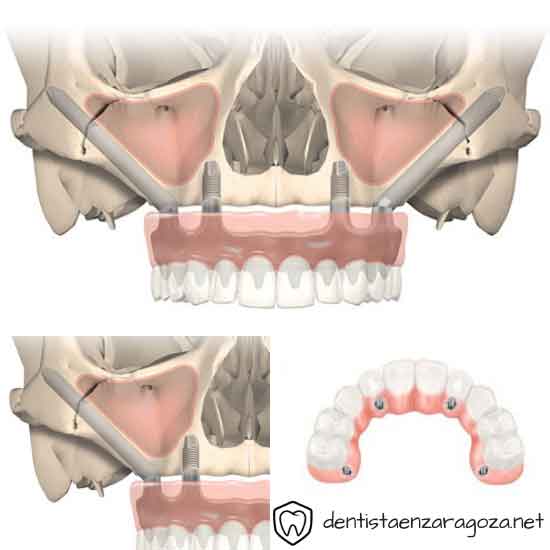
Zygomatic dental implants represent one of the greatest advancements in maxillofacial surgery. They are primarily intended for patients with insufficient bone structure in the upper jaw. Due to the greater length of the implant body, they are an ideal solution for patients with maxillary atrophy. Unlike traditional dental implants, this type of implant is anchored in the zygomatic bone, hence its name. Zygomatic implants are longer than traditional dental implants and are anchored to the upper jawbone that forms the cheekbone, also known as the zygomatic arch. These implants are often used as an alternative to bone grafting, making it possible to perform the procedure in a single stage.
Features of zygomatic implants
- Zygomatic implants are longer than standard dental implants and are placed deep within the bone that forms the cheekbone.
- Zygomatic implants are sometimes used as an alternative to complex bone grafting procedures, allowing the surgery to be performed in a single stage.
- Depending on bone availability, it may be possible to use just one or two zygomatic implants, along with 2–4 standard dental implants, to complete the restoration.
- In cases where bone availability has further diminished, up to 4 zygomatic implants can be used to achieve stable support for the restorations.
- In particularly difficult cases, where the jaw is exceptionally compromised by bone loss or advanced bone destruction, implants are designed and manufactured specifically for that particular situation.
A simple explanation of the process
The procedure uses a longer implant body than usual (up to 55 mm instead of the typical 10 mm or 15 mm for standard dental implants) that can be screwed into the zygomatic bone, rather than the jawbone, which benefits patients with maxillary bone loss.
In addition, zygomatic implants can be placed without surgery. Instead, the patient first undergoes a 3D CT scan of the jaw. This process allows the implant to be guided into the jaw in a non-invasive manner.
After anchoring the zygomatic implants in the upper jaw and within the zygomatic bone, a temporary prosthesis can be attached immediately afterward, until the final restoration is completed.
Benefits of zygomatic implants
- The teeth have a strong and durable foundation.
- The ability to bite and chew normally right away.
- It is an alternative to bone grafting or sinus lift procedures.
- The entire procedure can be completed in a single stage.
- A success rate of nearly 100%.
- A permanent alternative to dentures.
This post is also available in: Spanish

